Use case · Product story
Ship — packaging an open methodology kit like enterprise software
One Next.js surface: marketing truth, searchable patterns, integrations catalog, workflow/collection manifests, MkDocs-style reader, and a small FastAPI for agents — Apache-2.0 so legal does not block a pilot.
Executive summary
Ship exists so teams can adopt agentic SDLC without trading governance for speed. The kit is deliberately boring architecture (markdown in git, manifests for catalogs, Actions for automation) so procurement, security, and engineers read the same artifacts.
01 · Challenge
Methodology content drifts from what teams actually run
Playbooks in PDFs rot the day after export. Internal wikis diverge from CI. Buyers see glossy landing pages but cannot diff the operating model. Ship's challenge was to ship instruction-first truth that stays aligned with automation because both live in the same repository and render through the same app.
02 · Solution
Single surface: teach, browse, integrate, automate
The solution is a deliberately small product footprint: documentation as the source of truth, patterns as reusable plays, tools as integration-facing stubs, workflows and collections as JSON manifests over markdown folders, and an agent API for machine-readable contracts. ElMundi is the reference org story; Ship is the product story of the same kit.
03 · Implementation
How the kit is structured
- Landing app — Next.js App Router, Tailwind, shared header/footer, MDX/Markdown ingestion for docs and catalogs.
- Patterns + tools — file-backed content; URLs are stable paths for linking from Linear/Jira tickets.
- Workflows & collections — manifests at repo root for discoverability without a CMS.
- Backend — minimal FastAPI surface for agent operations (health + task intake) documented under Tools → Backend API.
04 · Outcomes
What good looks like for adopters
- Faster procurement loops — Apache-2.0, public repo, screenshots that match production routes.
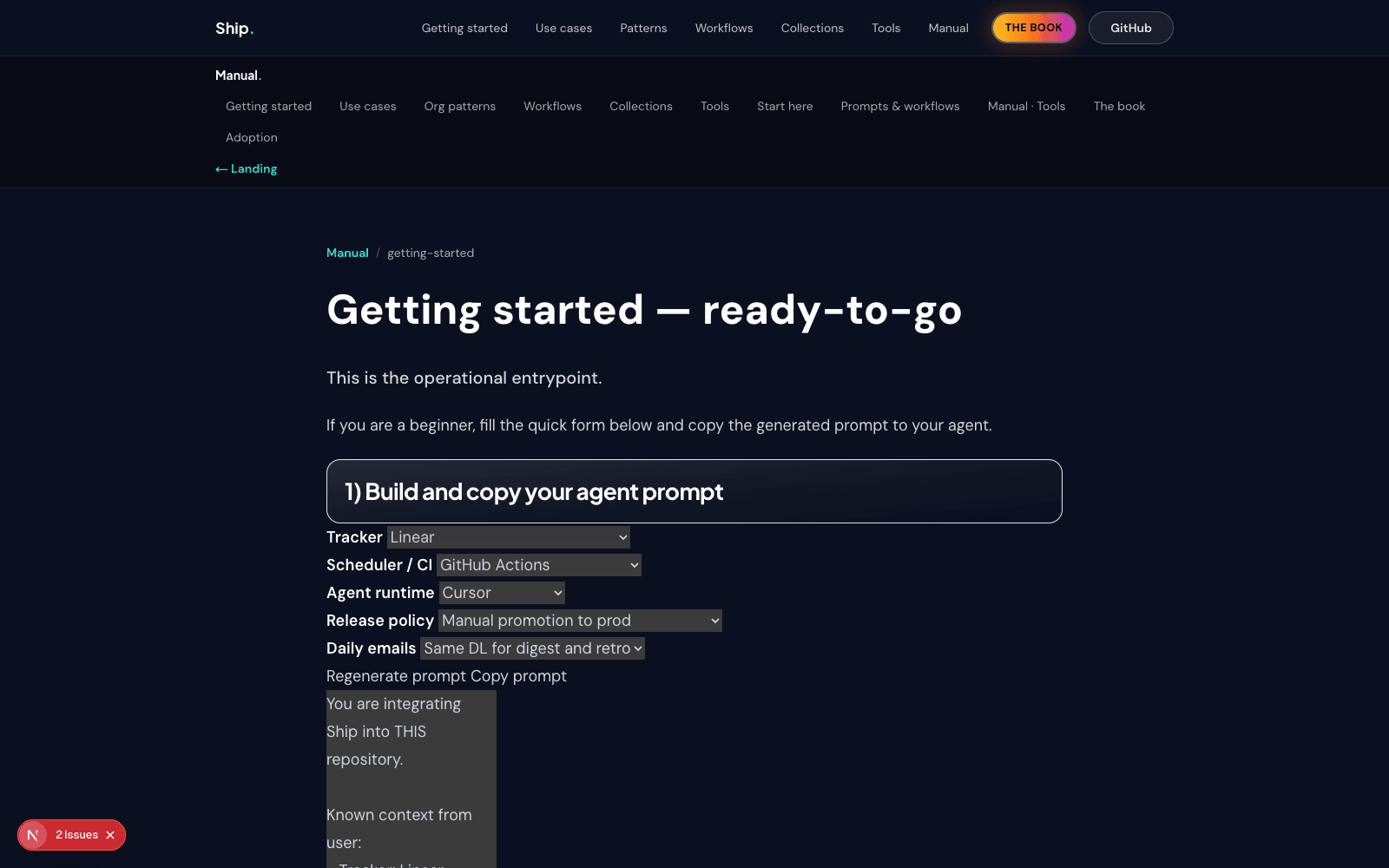
- Lower onboarding tax — `/docs/getting-started` mirrors how engineers already read internal runbooks.
- Composable adoption — take patterns only, or wire the full ElMundi reference stack.
Evidence
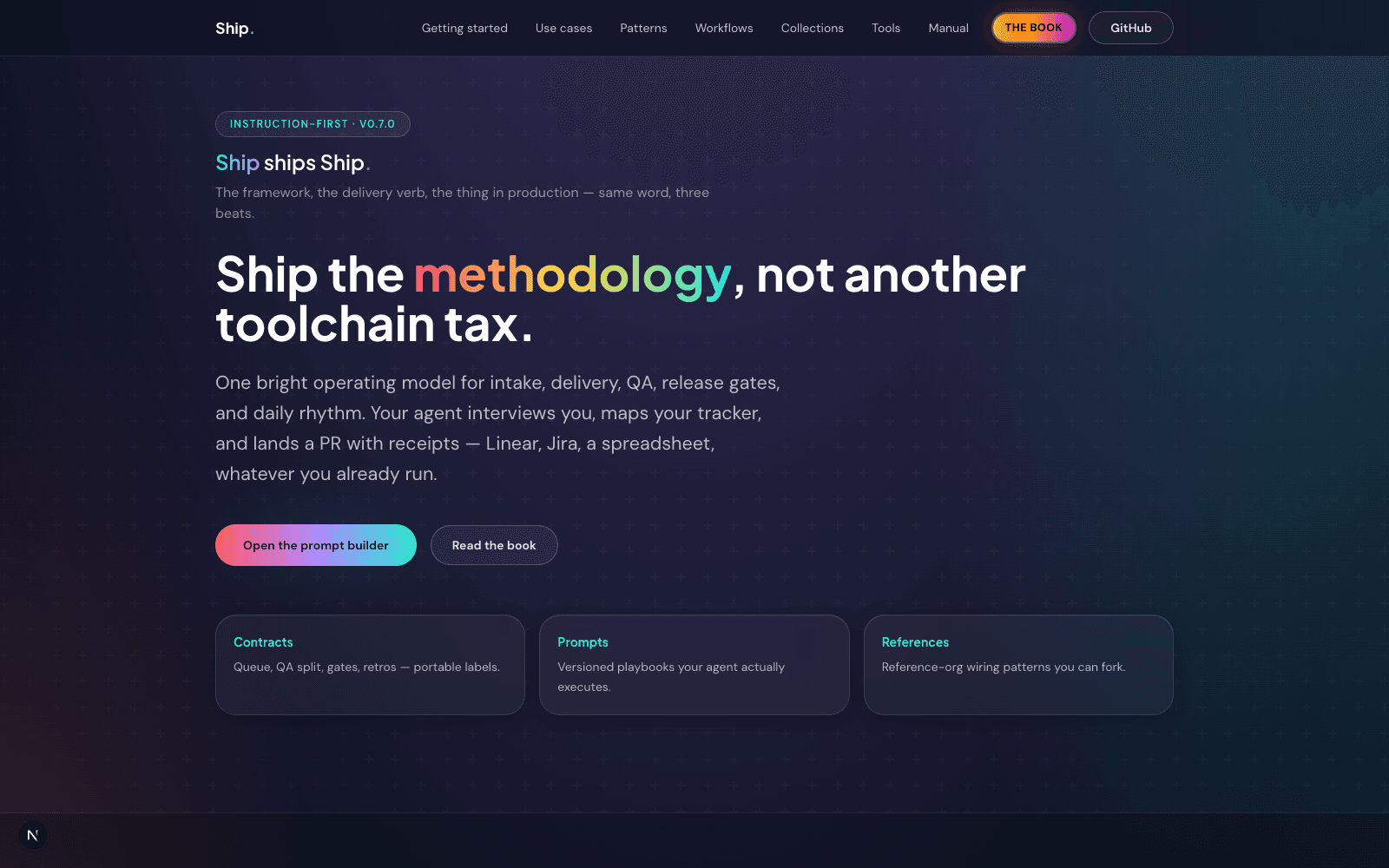
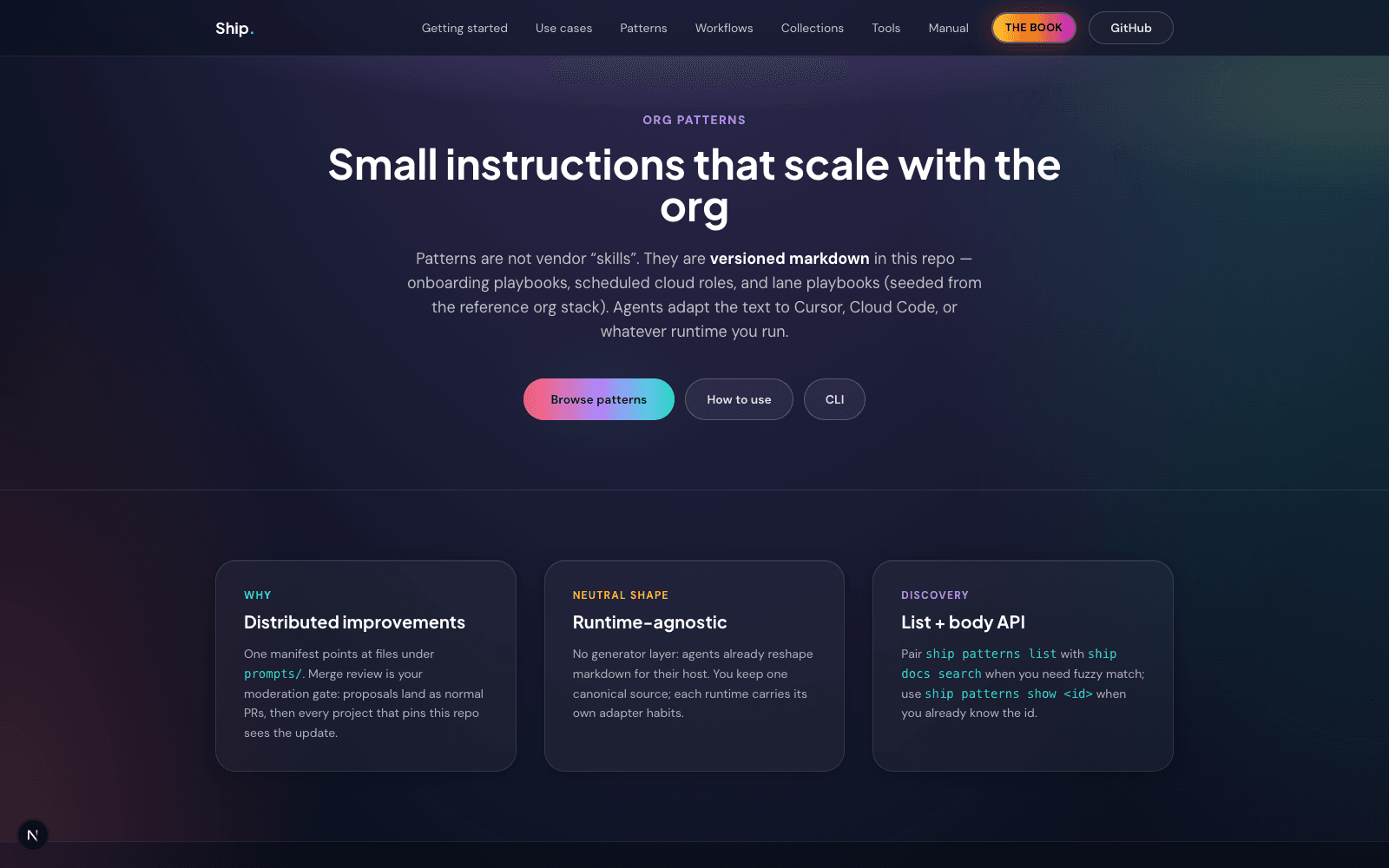
Screens from the live site
Captured from the same Next.js surface readers use — marketing, catalog, and manual routes.